

Giving Physical AI a Hand
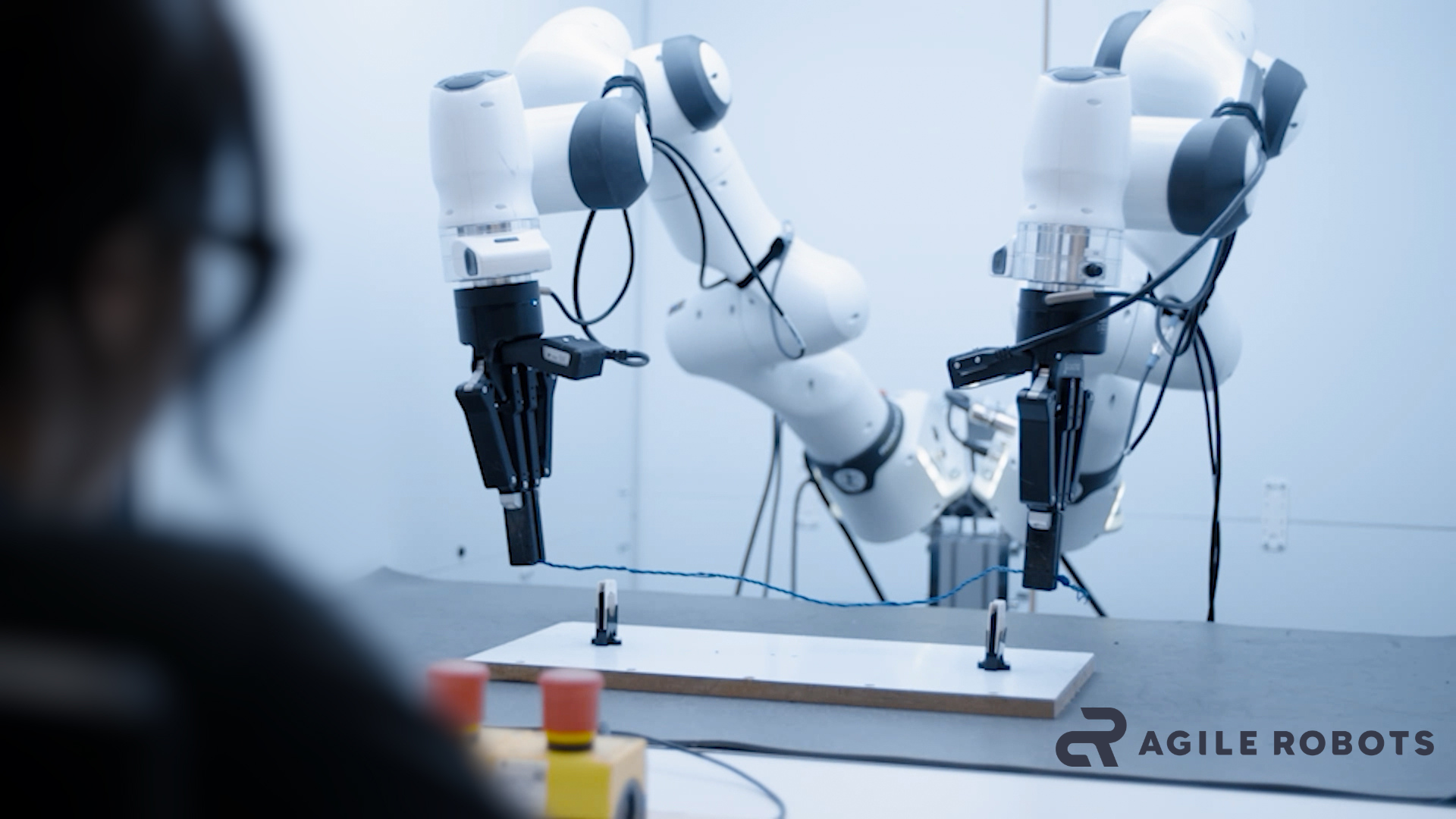
Why robots still struggle with manipulation, and what it will take to solve it
Artificial intelligence is advancing rapidly.
But robots still struggle with something humans do effortlessly: interacting with physical objects.
Picking up a box, manipulating a tool, or applying the right amount of force remains one of the hardest challenges in robotics.
In this ebook, Robotiq AI specialist Jennifer Kwiatkowski explores how hardware, sensing, and Lean Robotics principles can accelerate the development of reliable physical AI systems.
Inside the white paper
This guide explores the technologies and design principles shaping the future of robotic manipulation.
Inside, you will learn:
✔ Why manipulation remains the biggest bottleneck in robotics
✔ How end-of-arm tooling influences robot performance
✔ Why tactile sensing is becoming a critical capability
✔ How force sensing improves real-world interaction
✔ How lean robotics principles help move from demos to deployment
About the author
-modified.png?width=200&height=200&name=jen_pic_2%20(1)-modified.png "jen_pic_2 (1)-modified")
Jennifer Kwiatkowski is an AI Specialist at Robotiq, where she works across teams to develop AI that enhances Robotiq’s products and services. She previously co-founded movwize, a robotics software startup developing physics-informed AI for motion planning.
Jennifer holds a PhD from École de technologie supérieure (ÉTS), where her research focused on tactile sensing and machine learning for robotic grasp stability. She earned a B.Eng. in Mechanical Engineering from McGill University and previously worked in the aerospace industry validating aircraft engine control systems.