
Robotiq Grippers Physical AI

Robotiq enables Physical AI

Robotiq enables Physical AI by giving robots the sense of touch and control they need to learn and act in the real world.

AgileRobots_web

The Physical Foundation for AI

Robotiq is a recognized leader in adaptive grippers and accessories, with over 23,000 units deployed worldwide.

Our products work together to provide the core physical interaction and sensing capabilities required for multimodal learning, robotic manipulation, and Physical AI foundation model training.

By combining proven, robust hardware with multiple sensing modalities, Robotiq addresses two of the main challenges in Physical AI today: dexterity in real-world interaction and scalability at a sustainable cost.


Are you innovating fast in Physical AI?


Perception to Action

Robotiq products provide the physical interaction and feedback layer that allows AI systems to act in the real world.


Adaptive grippers mechanically conform to object variability, reducing the need for precise grasp planning, while force, torque, and tactile sensing deliver real-time physical signals for closed-loop control and learning.


Integrated with modern robotics and AI models, Robotiq hardware turns AI decisions into robust, data-rich physical actions.


Build and Simulate with Robotiq

ROS Packages

Build your robot application
Robotiq provides ROS packages that expose gripper control, force–torque data, and tactile sensing as first-class signals in your robotics stack.

Access ROS Package

NVIDIA Isaac Sim

Bridge simulation and reality for Physical AI
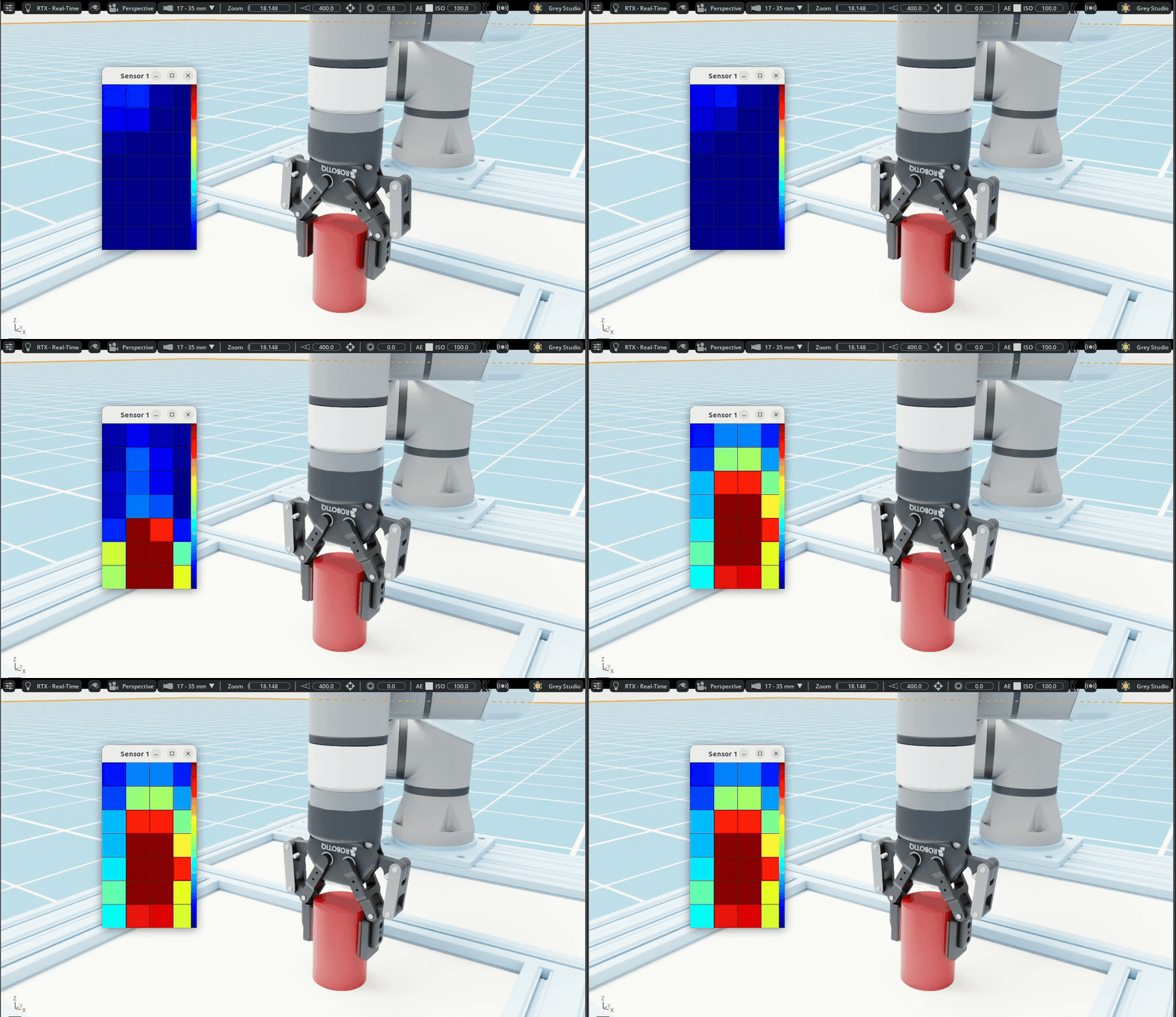
Robotiq hardware models are available in NVIDIA Isaac Sim, enabling simulation-based training and validation before deployment.

Adaptive_Grippers_sidetoside

Adaptive Grippers

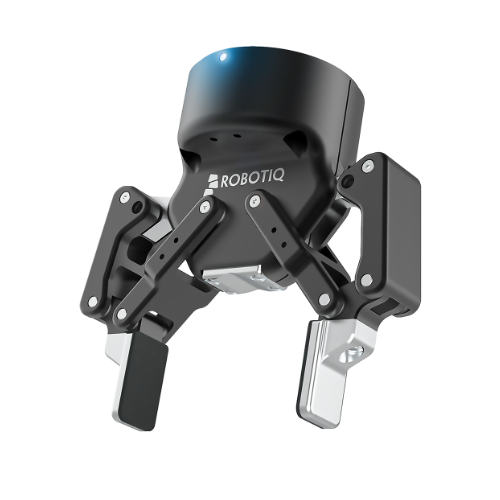
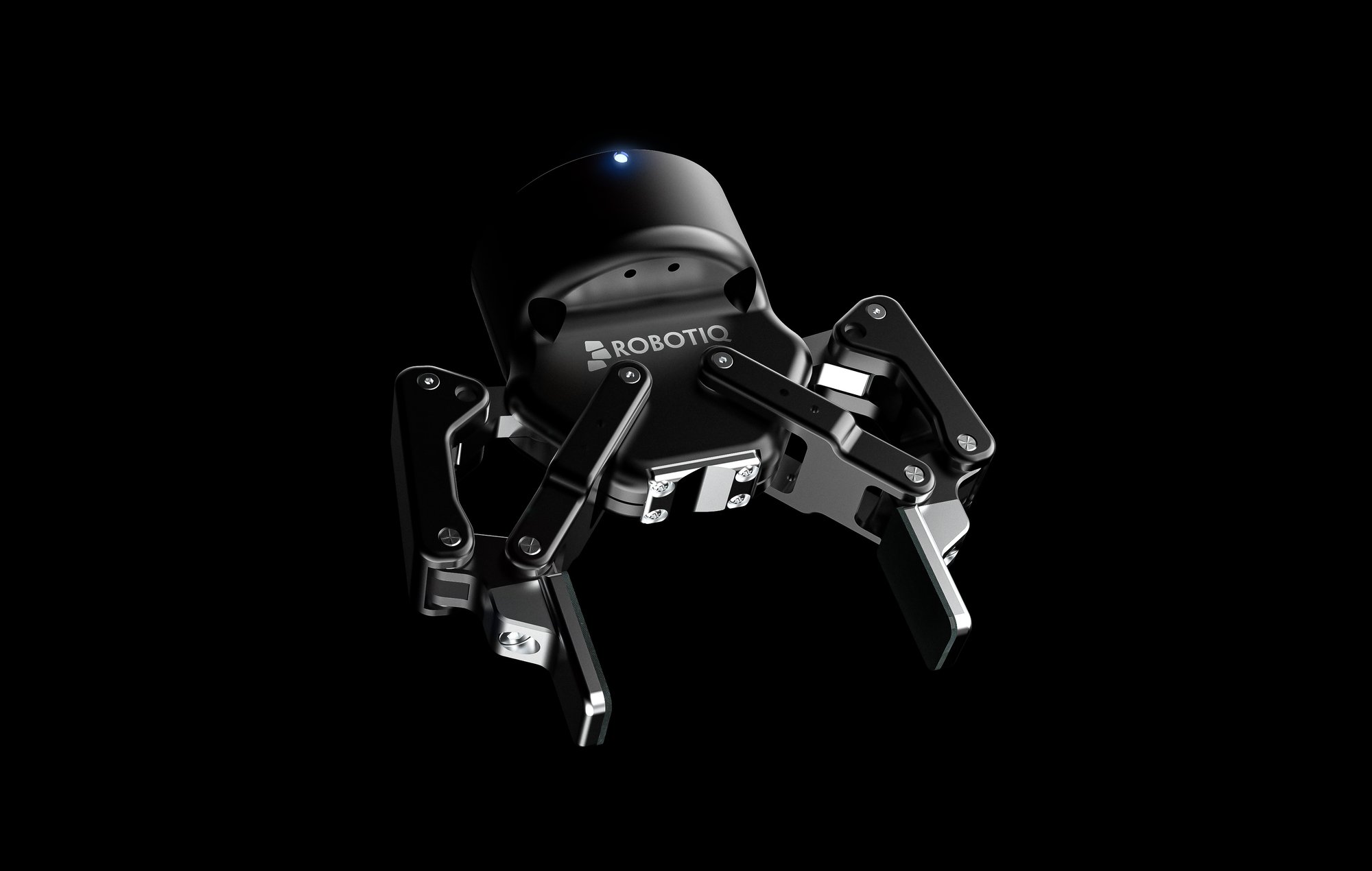
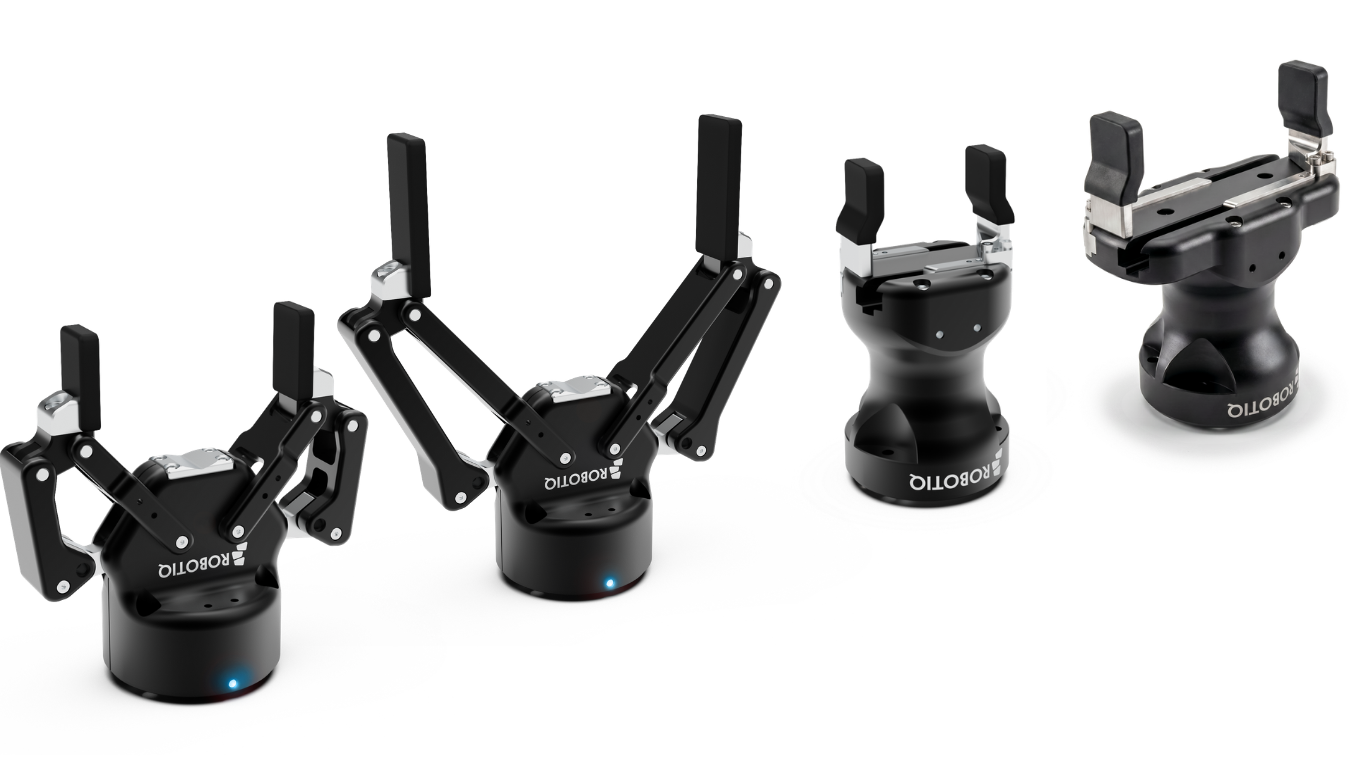
Adaptive grippers form the foundation of Physical AI manipulation. Robotiq’s 2F-85, 2F-140 and Hand-E grippers provide a simple, robust way to interact with a wide range of real-world objects.


High uptime: Reliable manipulation in unpredictable environments featuring a patented encompassing grip.


Consistent at scale: Proven, repeatable, and robust hardware with 23 000+ grippers deployed.


Flexible integration: Designed for modern AI pipelines with standard communication protocols.


High value: 90% of tasks at 10% of the cost.


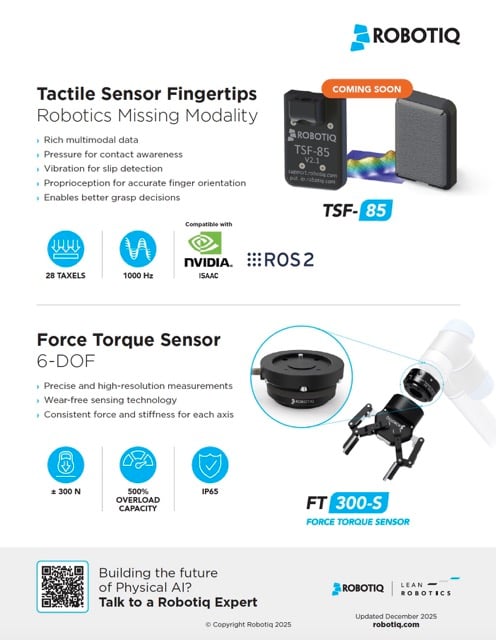
Tactile Sensor Fingertips

The TSF-85 provides rich multimodal data
for foundation model training, enables better grasp decisions and stability, improves generalization across objects and contact geometry for a consistent grip. 


Pressure for contact awareness with 28 taxels.

Vibration for slip detection at 1000 Hz.

Proprioception for accurate finger orientation with IMU sensing.

Force Torque Sensor - Physical AI

Force Torque Sensor

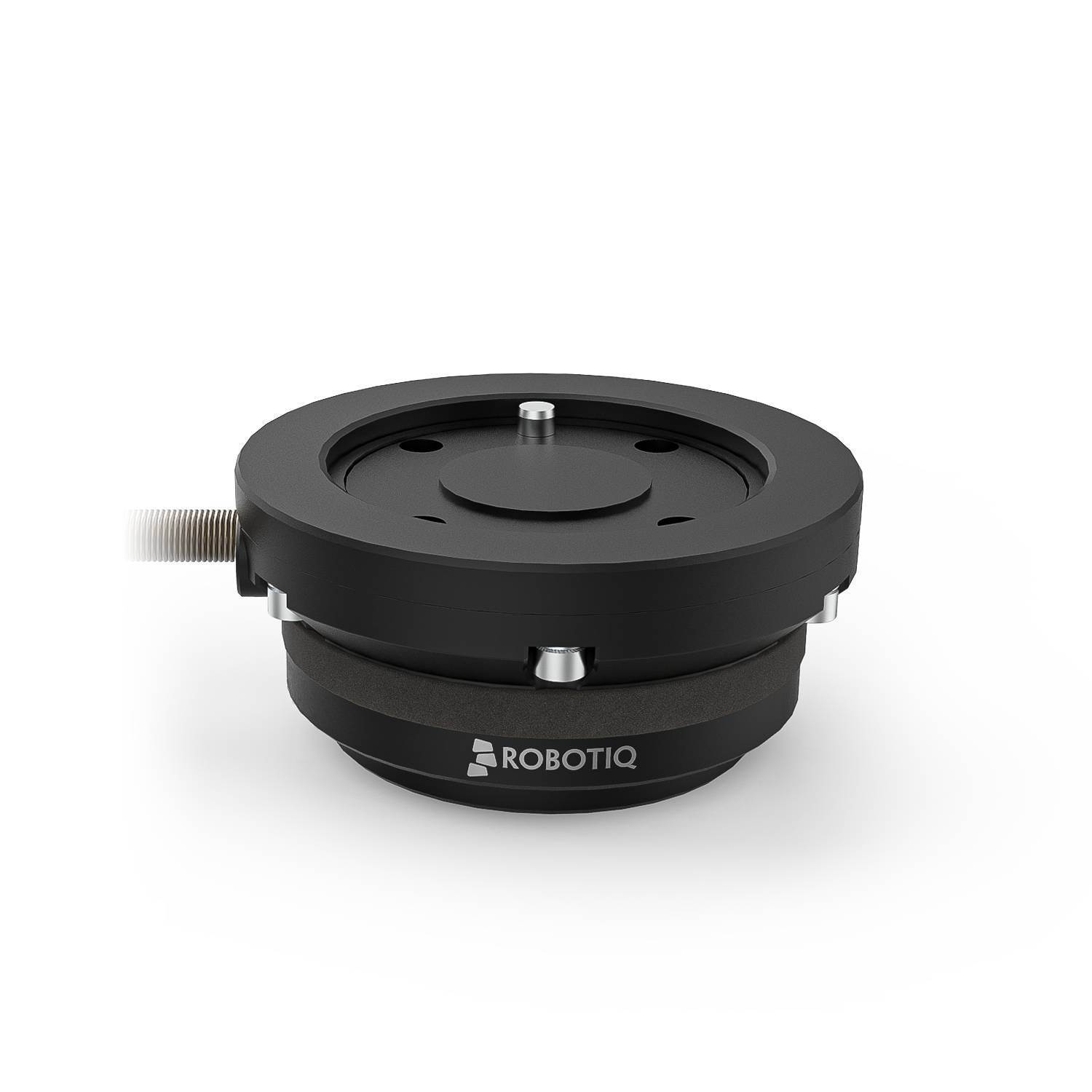
The FT-300-S is a 6-DOF force-torque sensor that gives Physical AI systems precise, high-resolution contact awareness for compliant, contact-rich manipulation.

By accurately detecting and measuring interaction forces, it enables robots to regulate contact, adapt to variability, and recover from uncertainty in real-world tasks, reducing tuning effort, simplifying programming, and accelerating the transition from simulation to reliable deployment.


Customer Applications


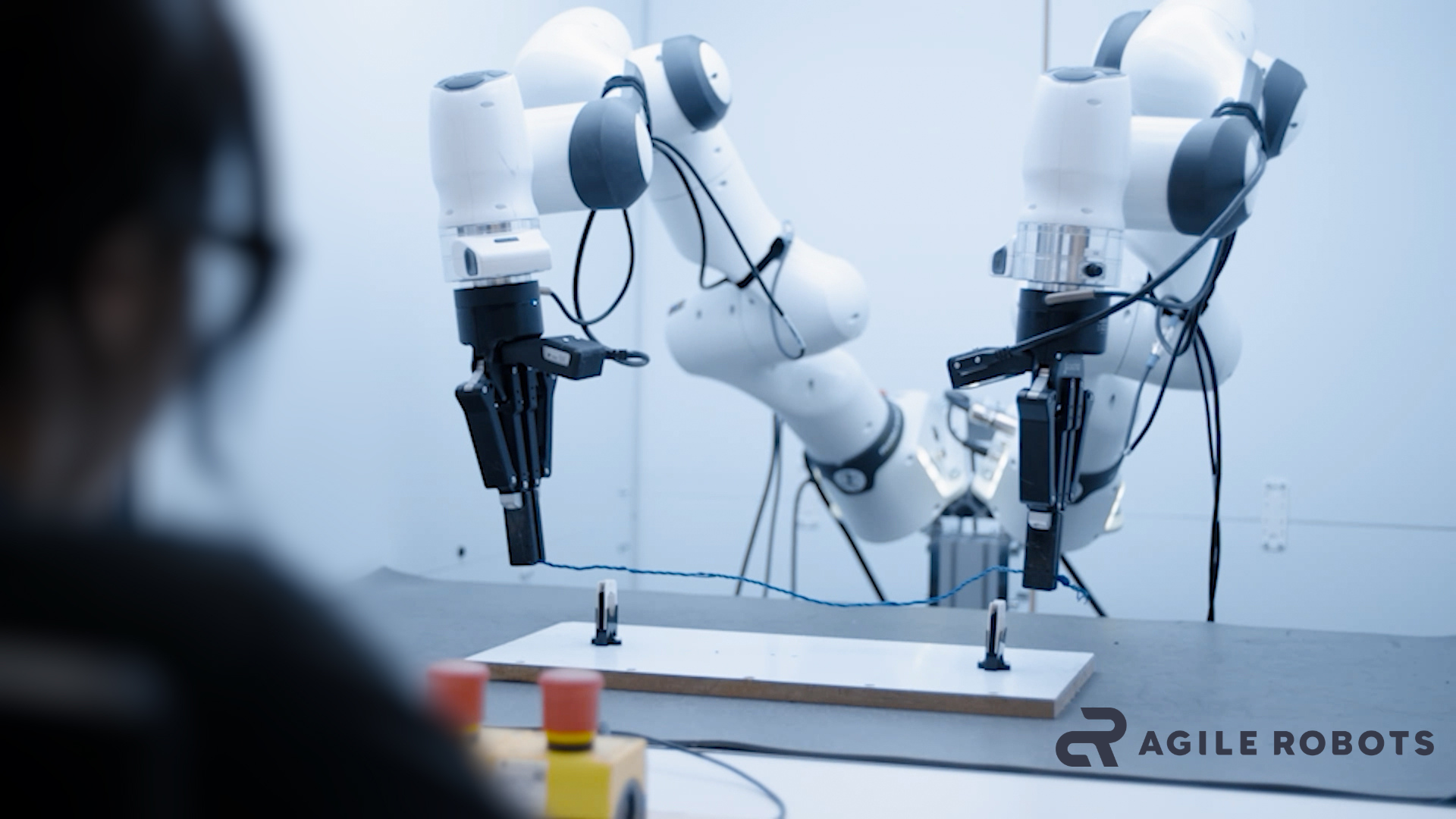
2F-85 Grippers on Franka Robotics FR3 Duo

FR3 Duo is a dual-arm system for Physical AI research that unifies teleoperation, data collection, and policy execution on one optimized platform. The 2F-85 enables the system with its multiple control parameters, mechanical features and precision. 


2F-140 Grippers at Medra.ai

Medra AI is leveraging advances in AI, computer vision, and natural language to build Physical AI systems that collect life science data with a level of precision and scale humans alone could never achieve. The Robotiq 2F-140 gripper is a key component of their integrated workcell, providing the adaptive gripping needed to reliably handle the diverse lab consumables like tubes, plates, and vials that complex biology protocols demand.


2F-85 Gripper with Skild Brain

Skild AI is developing a unified foundation model for Physical AI that can control any machine that moves. Robotiq grippers enables every step of the data flywheel, from data generation in the lab, simulation and deployment, supporting the system to continuously learn and improve.

To build physical AI that truly works, you need hardware that can sense, respond, and learn from every interaction. That's why we chose Robotiq. With Robotiq precision force control and reliable feedback, we capture rich sensory data from every grasp.
Alexei Filippov_YangoTechRobotics
Alexei Filippov
Head of business development, Yango Tech Robotics

Frequently Asked Questions

What is Physical AI?

Physical AI, also called embodied AI, is AI paired with a robot that perceives, decides and acts in the real world. It lets machines interpret their environment, make decisions and carry out tasks autonomously — reaching, grasping, manipulating and interacting with objects. Because those actions depend on real physical contact, hardware and sensing play a central role in making Physical AI work.

Why is data the main bottleneck in Physical AI?

Physical AI needs far more real-world interaction data than exists today. Unlike text, that data cannot be scraped — it has to be generated one trajectory at a time, on physical robots. The rate at which reliable, contact-rich data is collected now limits how fast generalist robot policies improve.

Why isn't vision enough for robot manipulation?

Vision shows what an object looks like, not what it feels like to grasp. Forces, torques, pressure and vibration only register on contact — and those signals decide whether a grasp holds, an insertion succeeds, or a fragile part survives. The strongest manipulation models combine vision with force-torque and tactile data at the end-effector, which is why instrumented grippers and wrist sensors are becoming standard in Physical AI pipelines.

How does Robotiq support Physical AI foundation model training?

Robotiq provides the physical interaction and feedback layer Physical AI models need. Adaptive grippers, the FT-300-S force-torque sensor and the TSF-85 tactile fingertips generate synchronised, multimodal data — force, torque, pressure, vibration and proprioception — for policy learning. Standardised ROS packages and NVIDIA Isaac Sim assets bridge simulation and reality, while 17 years of industrial-grade hardware design makes the resulting data reliable at scale.

Which Robotiq products anchor a Physical AI stack?

Three product families cover the perception-to-action loop. Adaptive grippers: 2F-85 (85 mm stroke, 5 kg payload), 2F-140 (140 mm, 2.5 kg), and Hand-E (50 mm, 7 kg). Tactile fingertips: the TSF-85, which swaps onto the 2F-85 and 2F-140. Force-torque: the FT-300-S, a 6-DOF sensor with ±300 N range and 500% overload capacity. All integrate with ROS, ROS 2 and NVIDIA Isaac Sim.


How reliable is Robotiq hardware?

Robotiq grippers are built for industrial duty cycles. The 2F-85 and 2F-140 carry a 2-million-cycle warranty at IP40, and the Hand-E a 5-million-cycle warranty at IP67. In practice, most units run well beyond those numbers. The TSF-85 is rated for over 1.5 million cycles. That durability matters in Physical AI because every hour a robot stays running is an hour it can collect training data.

What does the TSF-85 tactile sensor measure?

The TSF-85 captures three signals at the fingertip. Pressure is read across a 28-taxel capacitive array for contact shape and intensity. Vibration is sampled at 1000 Hz to detect slip. An IMU tracks fingertip orientation. It swaps onto the 2F-85 and 2F-140 without reducing gripper stroke.

Resources