
CASE STUDIES
How Martin Ray Winery automated wine case palletizing with a robotic palletizer
Martin Ray Winery
Key results
18-Month ROI
Achieved ROI quickly through labor savings and efficiency gains. It enabled employees to transition to higher-value roles within the winery.
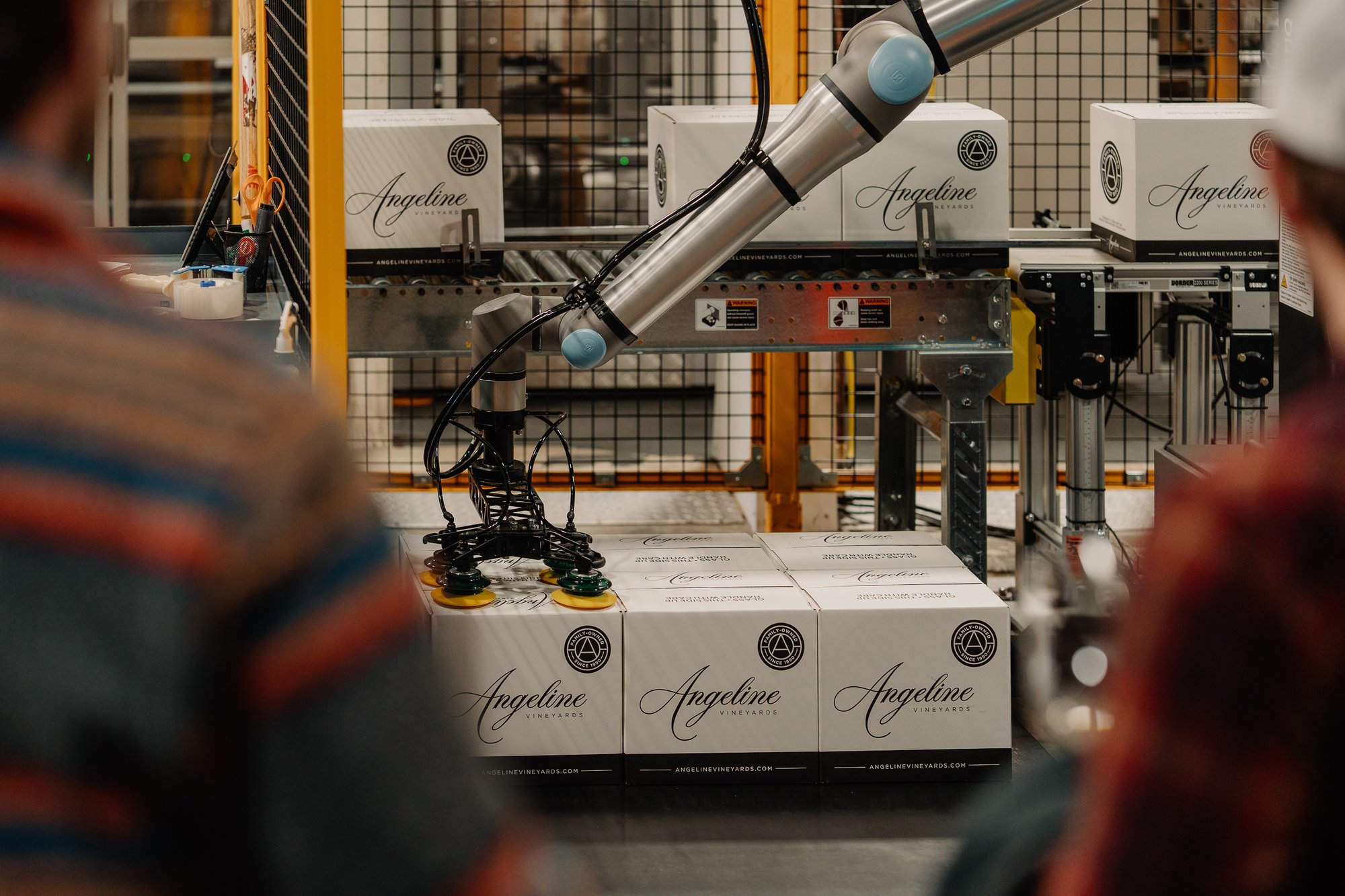
15 kg wine cases
Eliminated repetitive lifting of 15 kg wines cases boosted morale and had a significant reduction in physical strain on employees.
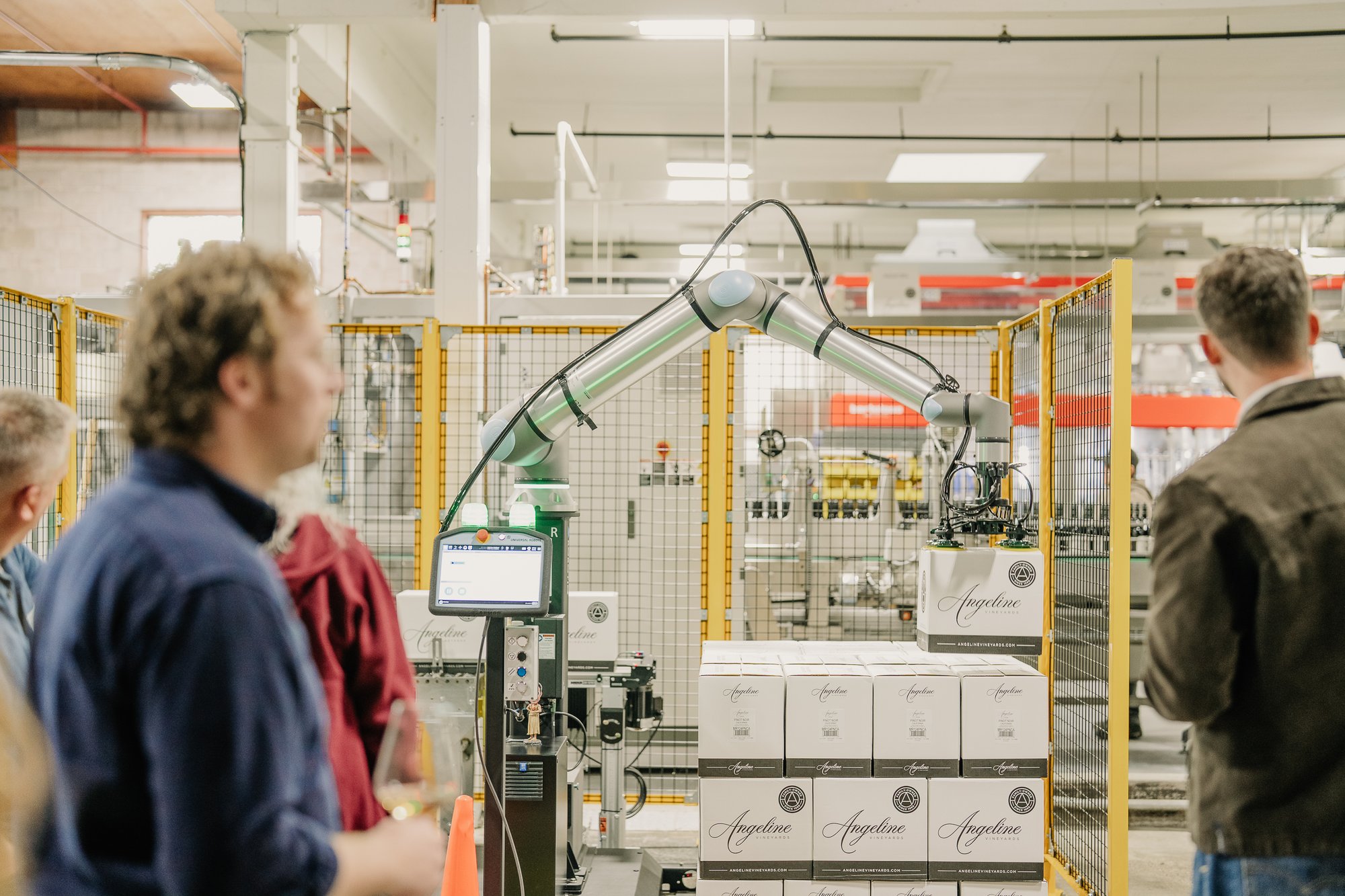
10 picks per minute
Maintained full bottling line throughput handling all different SKUs with increasing production volumes.
Company Overview
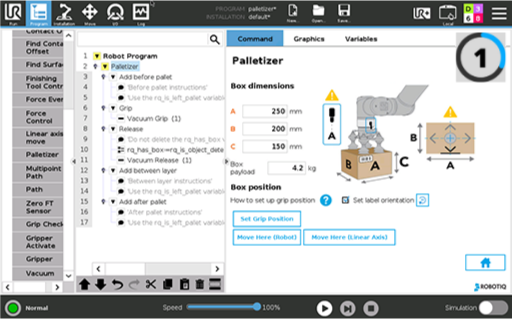
Step 1 - Box dimensions, weight and orientation
About Martin Ray Winery
Martin Ray Winery is a historic California winery with roots dating back to the 1940s. While the company blends tradition with modern winemaking practices, its production operations run year-round to meet market demand.
Like many wineries, Martin Ray relied on manual palletizing at the end of the bottling line, where employees stacked heavy cases of wine throughout the day. As production volumes increased, the team began exploring robotic palletizing automation to improve efficiency, reduce physical strain on employees, and control labor costs.
No video selected
Select a video type in the sidebar.
The Challenge
Before automation, palletizing was done entirely by hand. Two operators worked at the end of the bottling line stacking cases of wine throughout the day.
This manual palletizing process created several operational challenges:
- Repetitive heavy lifting created physical strain and injury risk
- Labor costs were significant, with manual palletizing estimated at USD 100,000 per year
- Hiring and retaining labor for repetitive tasks was becoming more difficult
- Traditional wine industry palletizing systems were large, complex, and expensive
Martin Ray also had a unique palletizing process. Instead of stacking cases on wooden pallets, the winery builds loads directly on the floor and moves them using clamp forklifts. This required adapting the robotic palletizing system to support their workflow.
The Solution
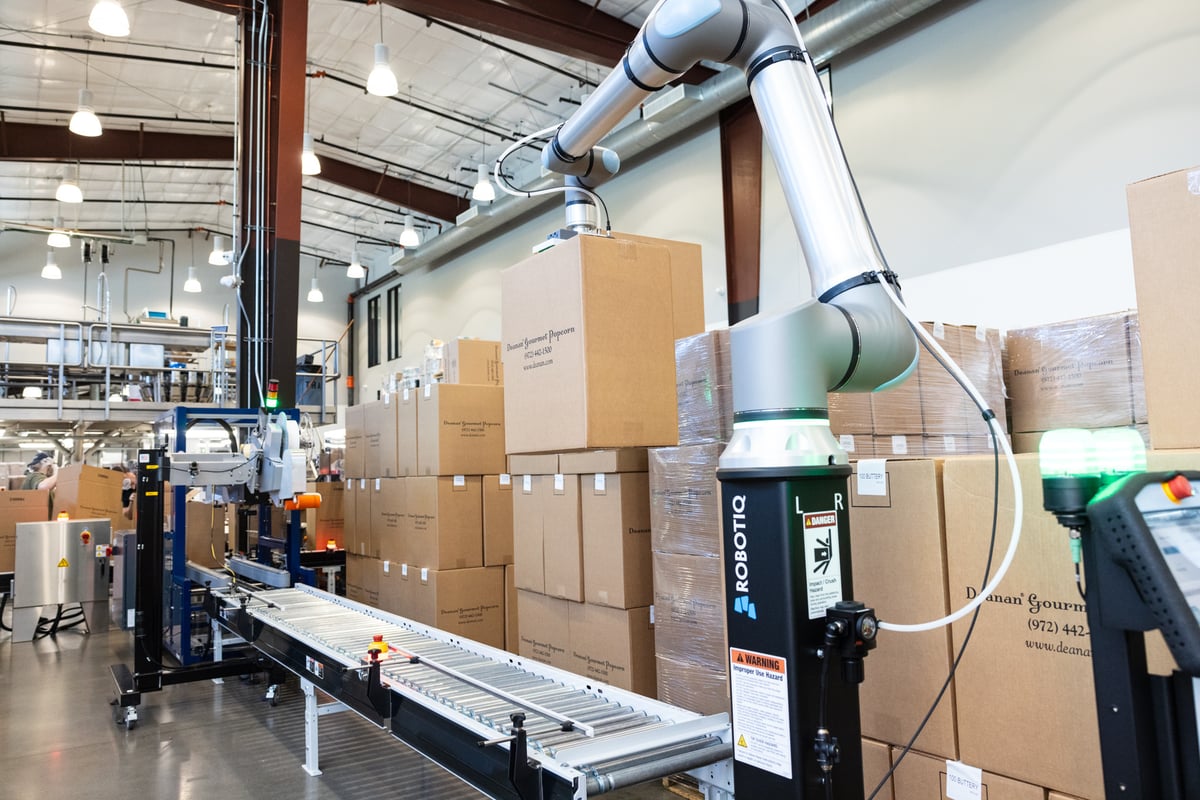
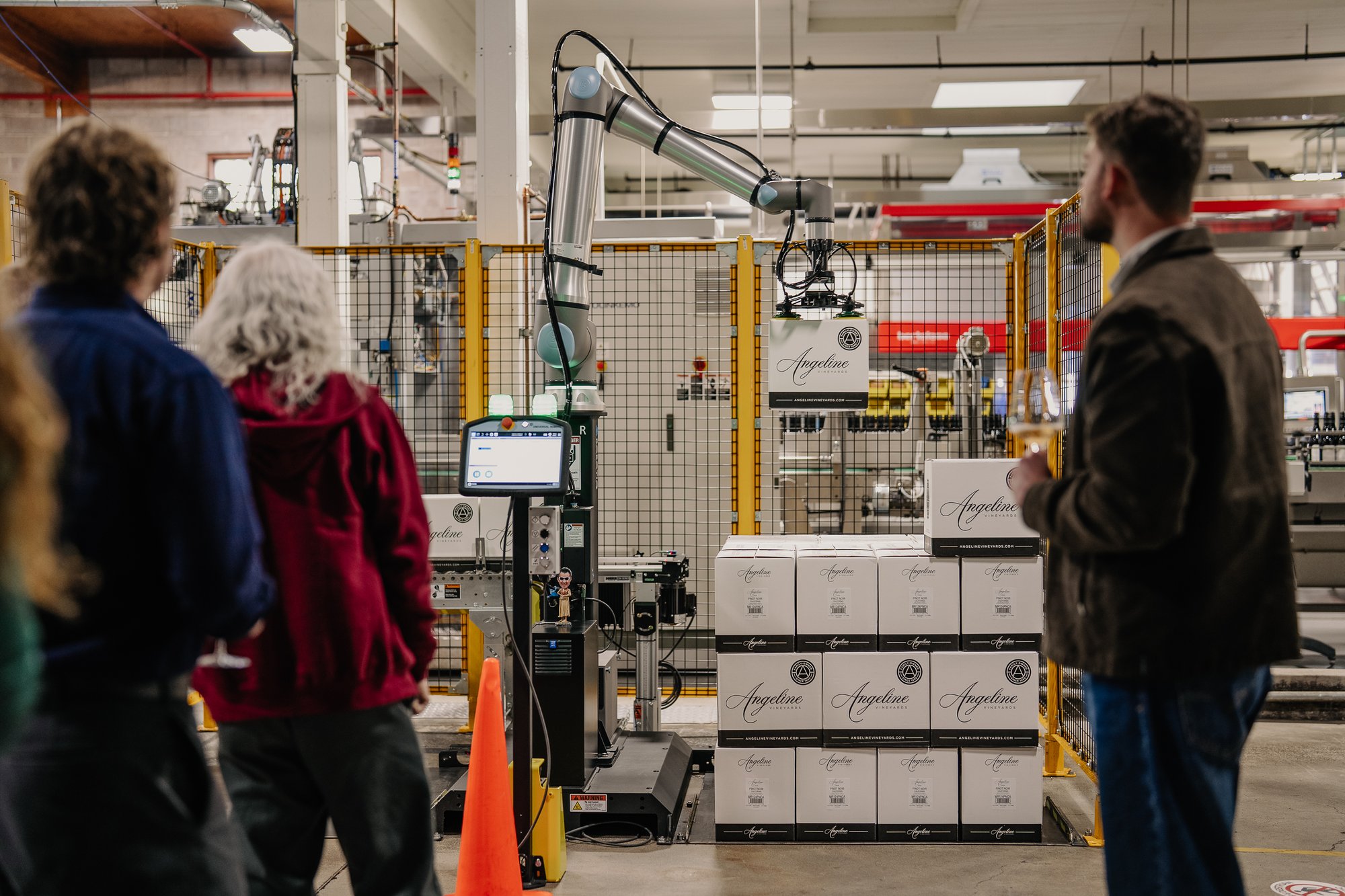
To automate the end-of-line process, Martin Ray Winery implemented the Robotiq PE20 robotic palletizer powered by a UR20 collaborative robot and PowerPick 30 vacuum gripper.
The palletizing system includes:
- Robotiq Lean Palletizing PE20
- UR20 collaborative robot
- PowerPick 30 vacuum gripper
- Infeed conveyor with gate system
- Safety scanner with fencing and safety relay
- Modified pallet area adapted to their floor-stacking method
In this application, the robotic palletizer operates at a rate of 6–10 picks per minute and can build loads between 67 and 96 inches high, allowing the system to keep pace with the winery’s bottling line.
Despite the winery’s unconventional floor-stacking approach, Robotiq engineers evaluated the process and successfully adapted the palletizing robot to support the application.
Why Martin Ray Chose Robotiq
Compact Footprint
Space on the bottling line was limited. The collaborative robotic palletizer fit within the existing layout without requiring major facility modifications.
Simpler Than Traditional Systems
Traditional palletizers used in wineries are large and complex. The Robotiq robotic palletizer offered a simpler and more flexible alternative.
Proven Experience with Wine Applications
Robotiq had already deployed palletizing robots in wineries and distilleries internationally, demonstrating that the system could reliably handle heavy wine cases.
Operational Flexibility
The palletizing robot supports simple changeovers through recipe adjustments, allowing operators to configure the system for different box sizes quickly.
The Robotiq solution
Frequently Asked Questions
Is Robotiq specialized in robotic palletizing automation for wineries?
Yes. Robotiq has extensive experience deploying robotic palletizing solutions in wineries and beverage production facilities. The company’s palletizing systems are designed to handle heavy cases, maintain consistent throughput, and fit within the limited floor space typically found in bottling lines.
Robotiq palletizing solutions are used by manufacturers worldwide to automate end-of-line palletizing for wine, spirits, and other beverages.
Can robotic palletizers handle heavy wine cases?
Yes. The robotic palletizing system used at Martin Ray Winery handles wine cases weighing approximately 15 kg while maintaining a pick rate of 6–10 picks per minute.
Robotiq Lean Palletizing can handle cases up to 32 kg and up to 13 picks per minute.
What ROI can wineries expect from palletizing automation?
Many wineries can achieve ROI within 1–2 years by reducing manual palletizing labor and improving operational efficiency.
Do robotic palletizers require large floor space?
No. Collaborative robotic palletizers typically have a much smaller footprint than traditional palletizing systems.
Can operators adjust the palletizing robot for different box sizes?
Yes. Operators can configure new box formats by entering box dimensions, weight, and palletizing pattern, making changeovers simple and fast.
Could your bottling line be automated, too?
If your operation:
- palletizes manually with ergonomic risks
- has high labor cost
- has increasing production