
CASE STUDIES
Screwdriving Automation and Cobot Components for Electrical Equipment Manufacturers | Schweitzer Engineering Laboratories
How SEL reduces ergonomic risk, improves product quality, and scales assembly automation using Robotiq cobot components.
Key results
1.4 million screws automated yearly
What once required operators to hand-drive 4,000 screws across hundreds of units each day is now fully automated, removing the most physically demanding manual task from the production line entirely.
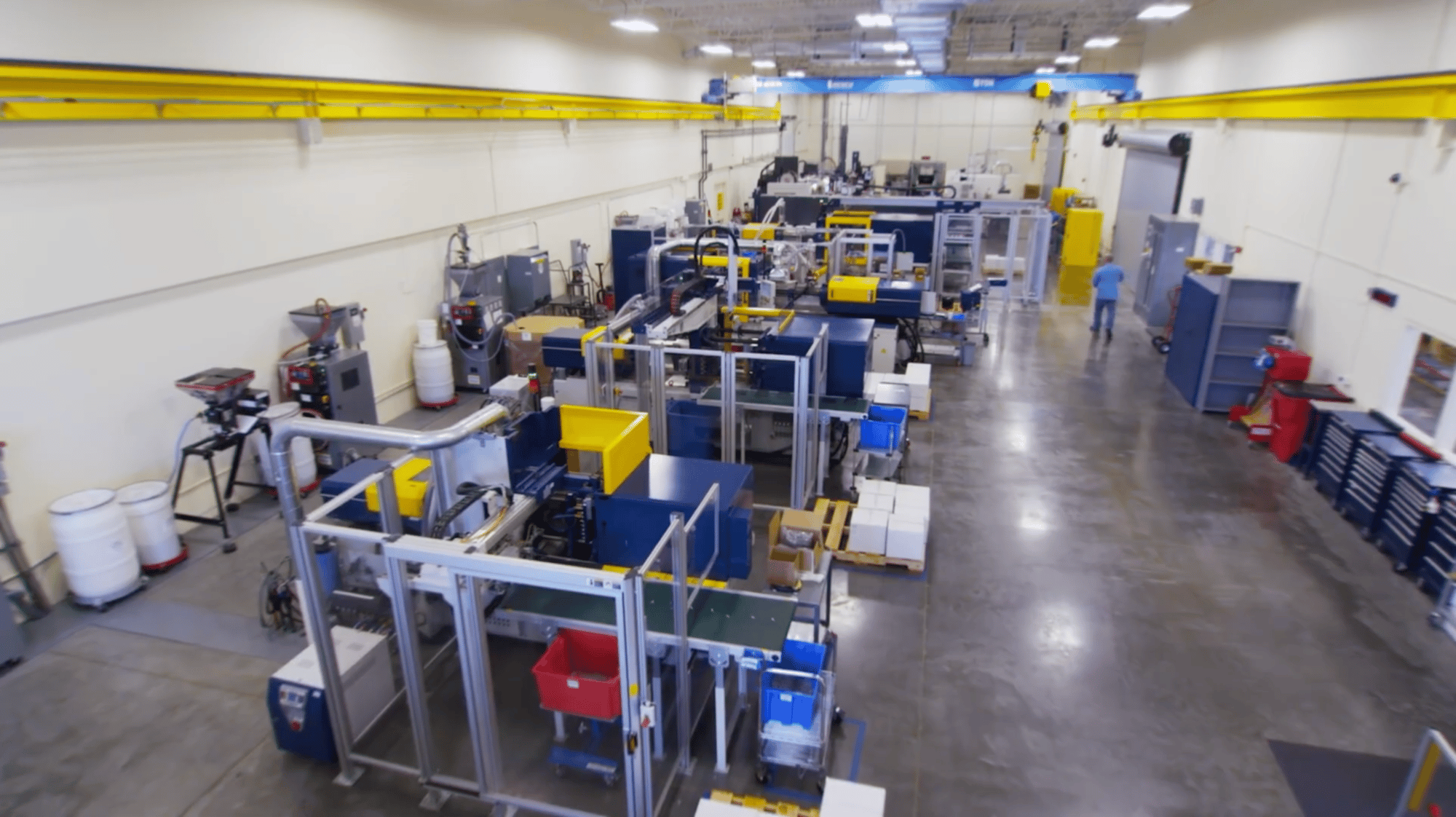
27 active stations across the facility
From 1 pilot cell to 27 production stations, what started as a single screwdriving cell has grown into a multi-cell automation program with Robotiq products ranging from grippers to screwdrivers.
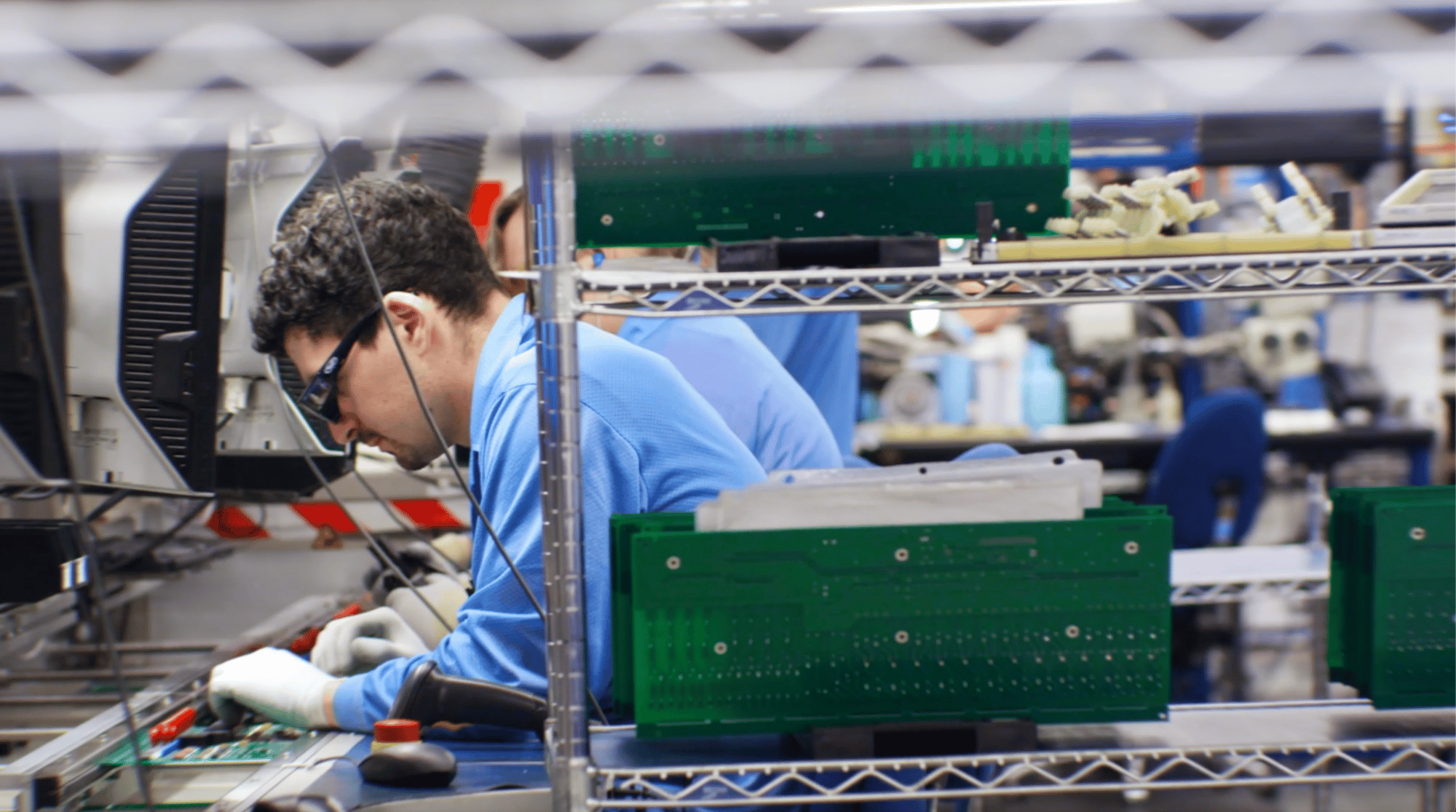
3 to 0 rotator cuff injuries
After 3 cases in two years, automating the repetitive manual assembly movements eliminated the ergonomic strain that had built up as SEL's production volumes increased.
Company Overview
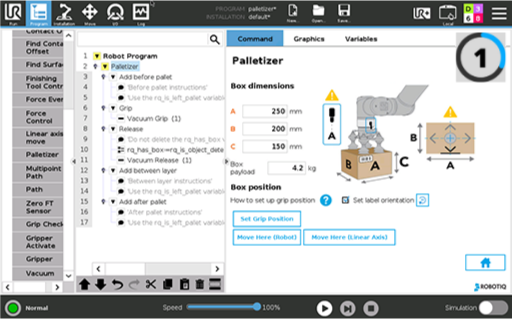
Step 1 - Box dimensions, weight and orientation

About SEL
Schweitzer Engineering Laboratories (SEL) designs, develops, and manufactures digital products and systems to protect, automate, and control critical infrastructure, from power systems and data centers to factories and essential services in over 170 countries.
Founded in 1984 and headquartered in Pullman, Washington, SEL is 100% employee-owned with more than 7000 employees worldwide. Unlike many manufacturers, SEL keeps R&D, design, assembly, testing, and distribution almost entirely in-house across five U.S. manufacturing centers, maintaining tight control over every stage of production.
With a mission to make electric power safer, more reliable, and more economical, quality is a top priority at SEL. Their commitment to reliability makes repeatability, traceability, and continuous process improvement core to SEL's operations.
The Challenge
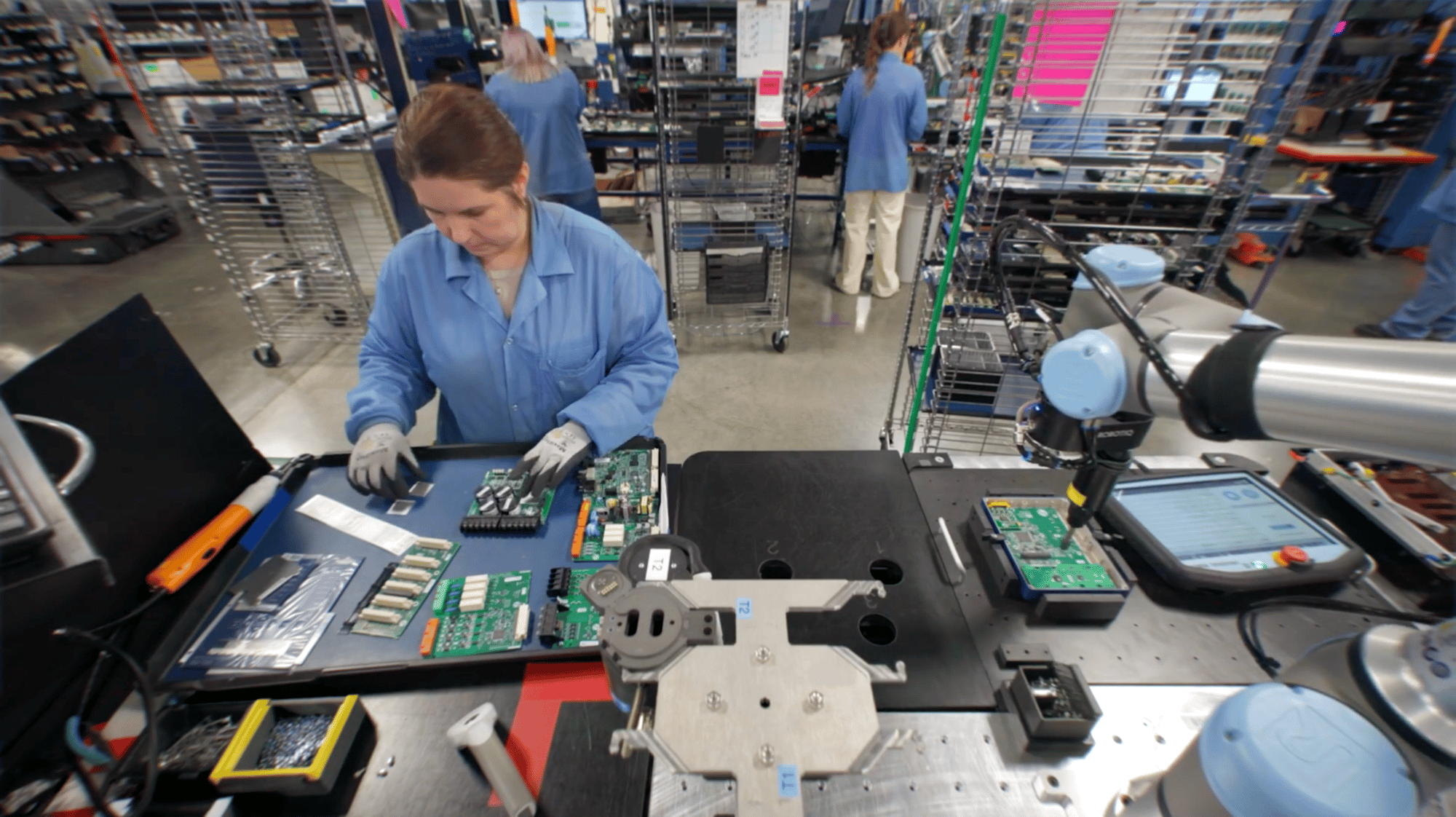
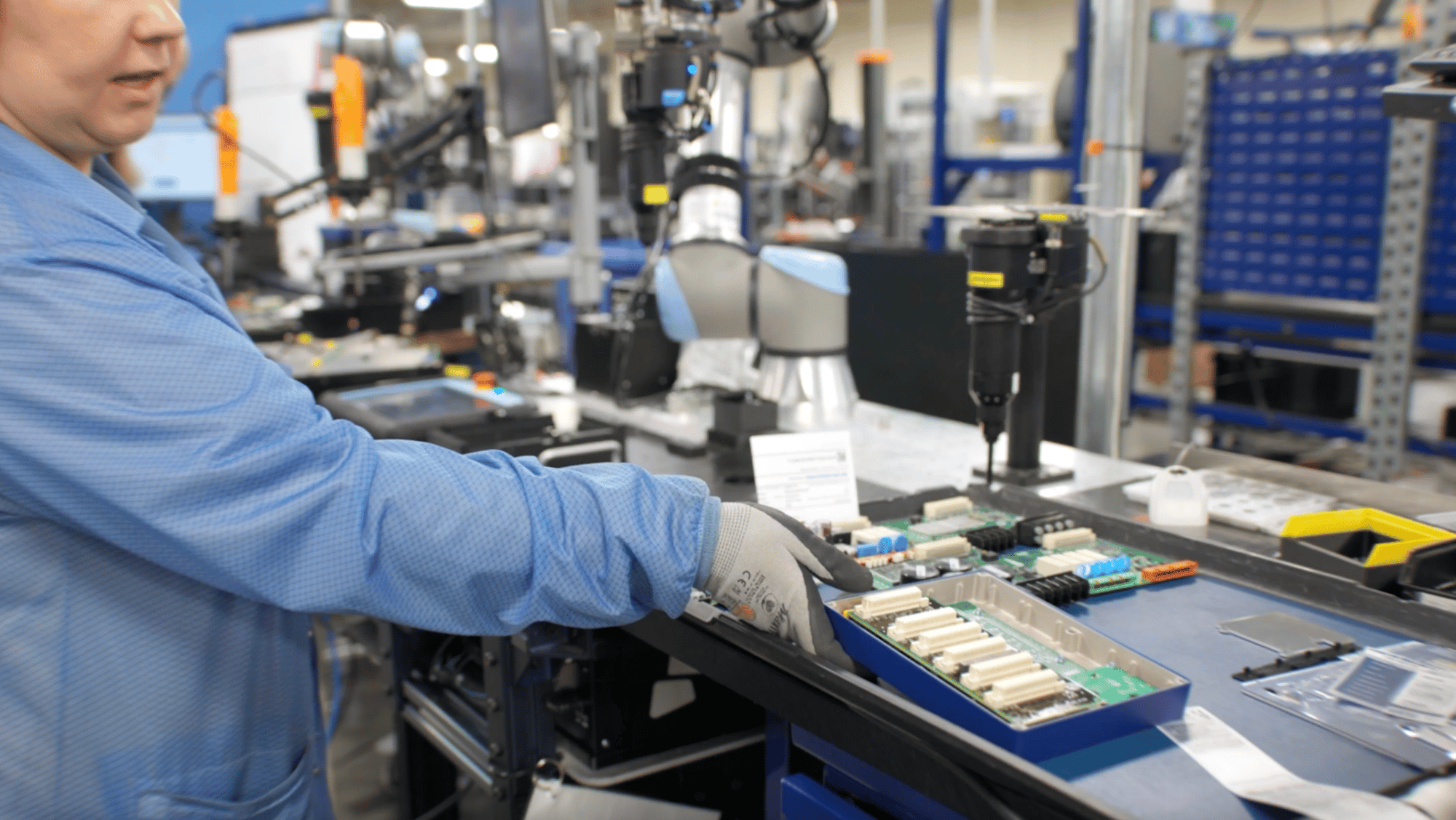
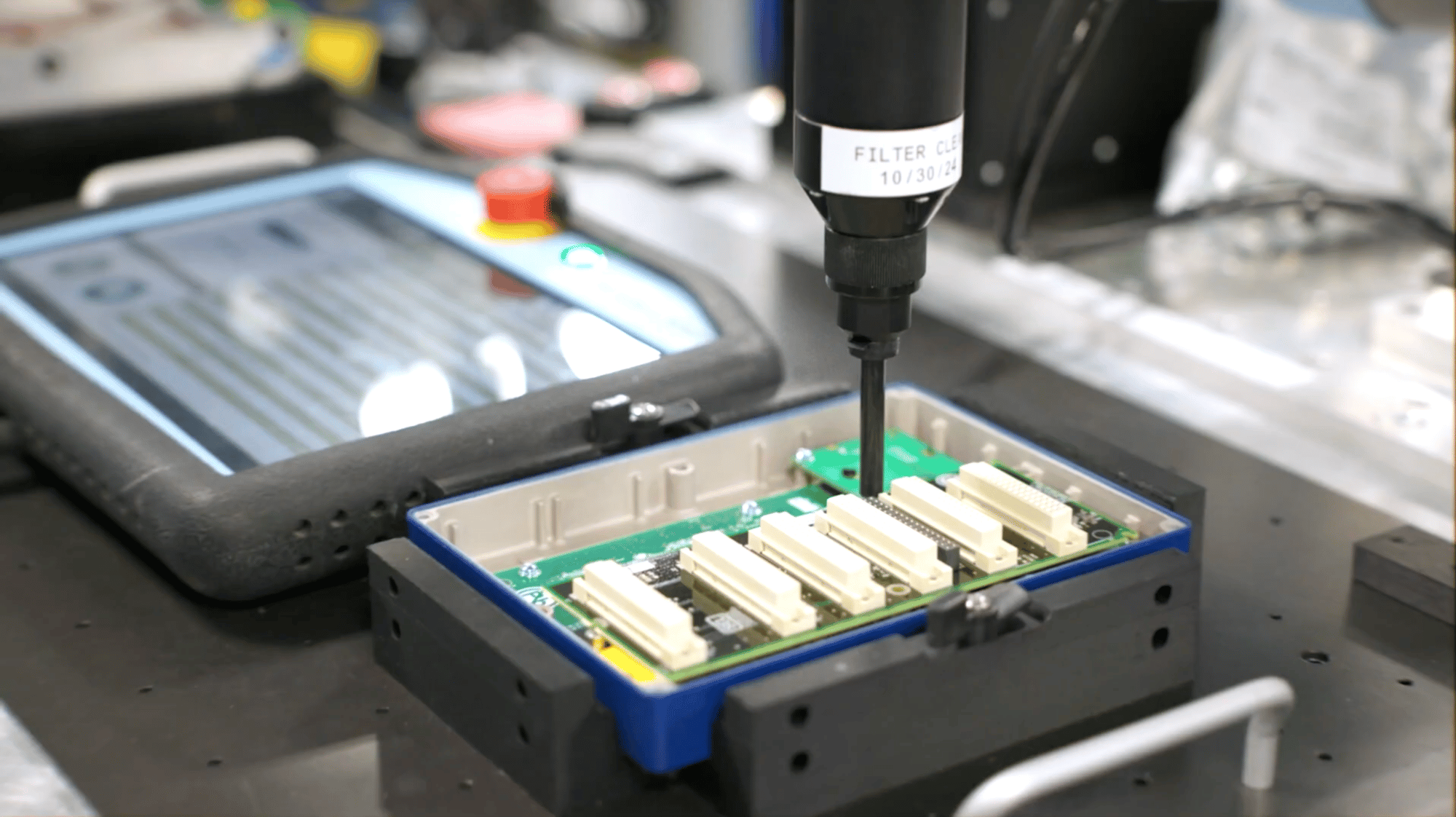
As SEL's production volumes increased, tasks that were once manageable became real ergonomic challenges. One product, the 700 series, required operators to drive 8 screws on the rear panel, repeatedly reaching up to grab a tool and tighten screws all day long.
With hundreds of moving through the line each day, operators were manually driving 4000 screws daily. Within two years, three operators suffered rotator cuff injuries, a clear sign that the cumulative physical strain was significant and increasing. SEL was looking for an automation solution capable of:
- Eliminating repetitive ergonomic risks and injuries
- Integrating quickly without a long deployment cycle
- Operating with minimal training and ease of use
- Scaling to other products and applications beyond the initial use case
The Solution
SEL acquired their first Robotiq Workcell, specifically building a Screwdriving Workcell integrated with a UR cobot. The ease of implementation, thanks in particular to the Robotiq URcap software, meant a working program was running within days.
Building on this initial success, SEL’s automation program quickly expanded with the addition of more cobot components:
- Workcell: Screwdriving (including feeders for high-volume screw supply), now used on multiple product lines
- Components: Adaptive Grippers (2F-85 & 2F-140) for pick & place of circuit boards and parts
- Tool changer by TripleA for enabling multi-component cells
What began as a single pilot cell became a coordinated multi-cell automation program, and the results went beyond ergonomics. Since deploying the solution, SEL has recorded zero customer feedback or returns related to screwdriving.
Why SEL Chose Robotiq
Rapid time to value
A working automation Workcell using Robotiq cobot components was running within 3 months. The URcap integration with Universal Robots made programming fast and accessible for SEL's internal engineers.
Full ROI within one year
Factoring in hardware costs and the financial impact of ergonomic injuries, SEL recouped their investment within twelve months.
Low barrier to entry
The price of a Robotiq Workcell allows teams like SEL's to acquire one and start experimenting with it internally, reducing the barrier to proving ROI before committing to a larger-scale deployment.
Easy operator training
New operators were able to be quickly trained on the use of Robotiq cobot components and workcell. The ease of use reduced training time and reliance on specialized knowledge.
The Robotiq solution
Frequently Asked Questions
What are cobot components and how are they used in manufacturing?
Cobot components are end-of-arm tools and accessories designed to work with collaborative robots on the factory floor. They attach to the robot arm and enable specific tasks across a range of applications. Robotiq's component lineup includes adaptive grippers, vacuum grippers, a wrist camera, force torque sensor, force copilot, and tactile sensor fingertips, each designed to handle tasks such as picking and placing parts, inspecting assemblies, or sensing force, and a range of other manufacturing applications.
What is a cobot workcell?
A cobot workcell is a ready-to-deploy workspace where a collaborative robot and its components work together to perform a specific manufacturing task. Robotiq offers workcells built around the most common applications on the factory floor, including palletizing, machine tending, and screwdriving. Each workcell is designed to be compact, repeatable, and straightforward to integrate into an existing production line, so teams can go from receiving hardware to a working application in days rather than months.
How quickly can a cobot workcell be up and running?
With Robotiq cobot components, a functional workcell can often be operational within days of receiving the equipment. The key factors are the complexity of the task and how well-defined the application is. Highly repetitive, structured tasks, such as tightening the same set of screws on a standard product, are generally the fastest to deploy and validate.
Can multiple cobot components work together in the same cell?
Yes. Cobot components are designed to be modular and interoperable. A single workcell can combine a screwdriving component, an adaptive gripper, a wrist camera for inspection, and a tool changer, allowing the robot to perform multiple tasks within a single automated station. This modularity allows manufacturers to start with single functionality and expand gradually without having to rebuild the cell from scratch.
What types of assembly tasks are best suited for cobot grippers and screwdriving components?
Cobot components perform best on tasks that are repetitive and physically demanding for human operators. Ideal applications include driving screws at fixed locations on a product, gripping and placing electronic circuit boards, and end-of-line inspections. These tasks combine a high cycle count with precision requirements, exactly where cobots equipped with the right components offer the greatest benefits in terms of ergonomics and productivity.
What return on investment (ROI) can manufacturers expect from deploying cobot components?
The payback period for cobot automation using gripping and screwdriving components typically ranges from one to two years, depending on labor costs, work schedules, and production volume. The main factors are labor savings achieved through the automation of repetitive tasks, reduced risk of ergonomic injuries, and improved throughput consistency. Manufacturers also report secondary benefits, including easier reassignment of operators to higher-value-added tasks and faster onboarding of new employees.
Do operators need robotics experience to work with Robotiq cobot components?
No specialized training in robotics is required. Cobot components are designed to be accessible, and URCaps (software part of the products on UR cobots) allow engineers and technicians to program and adjust tasks through intuitive interfaces. Most manufacturers find that existing staff can learn to deploy, modify, and maintain cobot workcells using cobot components with minimal external support.
Could your assembly line benefit from Robotiq Screwdriving Workcell or other Robotiq cobot components?
If your team is doing repetitive assembly, pick & place, or parts handling, Robotiq cobot components are built to grow with you, from a single pilot cell to a full multi-cell automation solution.