
CASE STUDIES
Doubled Output and Reduced Physical Strain with the Robotiq Palletizing Solution | Bulles Création
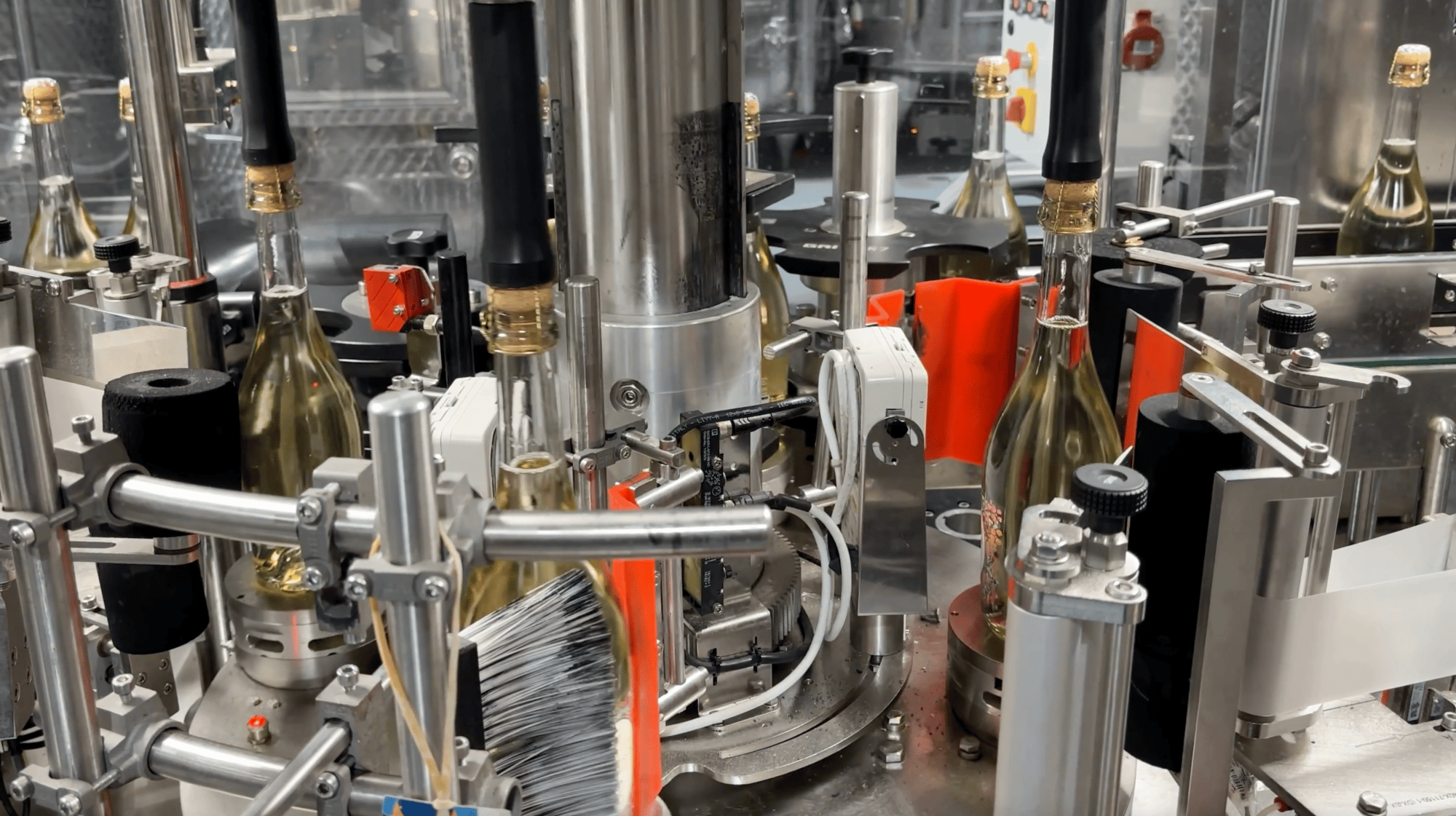
To meet growing demand, Bulles Création, a French company specializing in the production and bottling of sparkling beverages, decided to automate its bottling line.
Key results
Output doubled
Production rose from around 1,500 to 2,500 bottles per hour. The new automated line still holds significant room for growth (up to 3,000 bottles per hour).
Cartons up to 20 kg
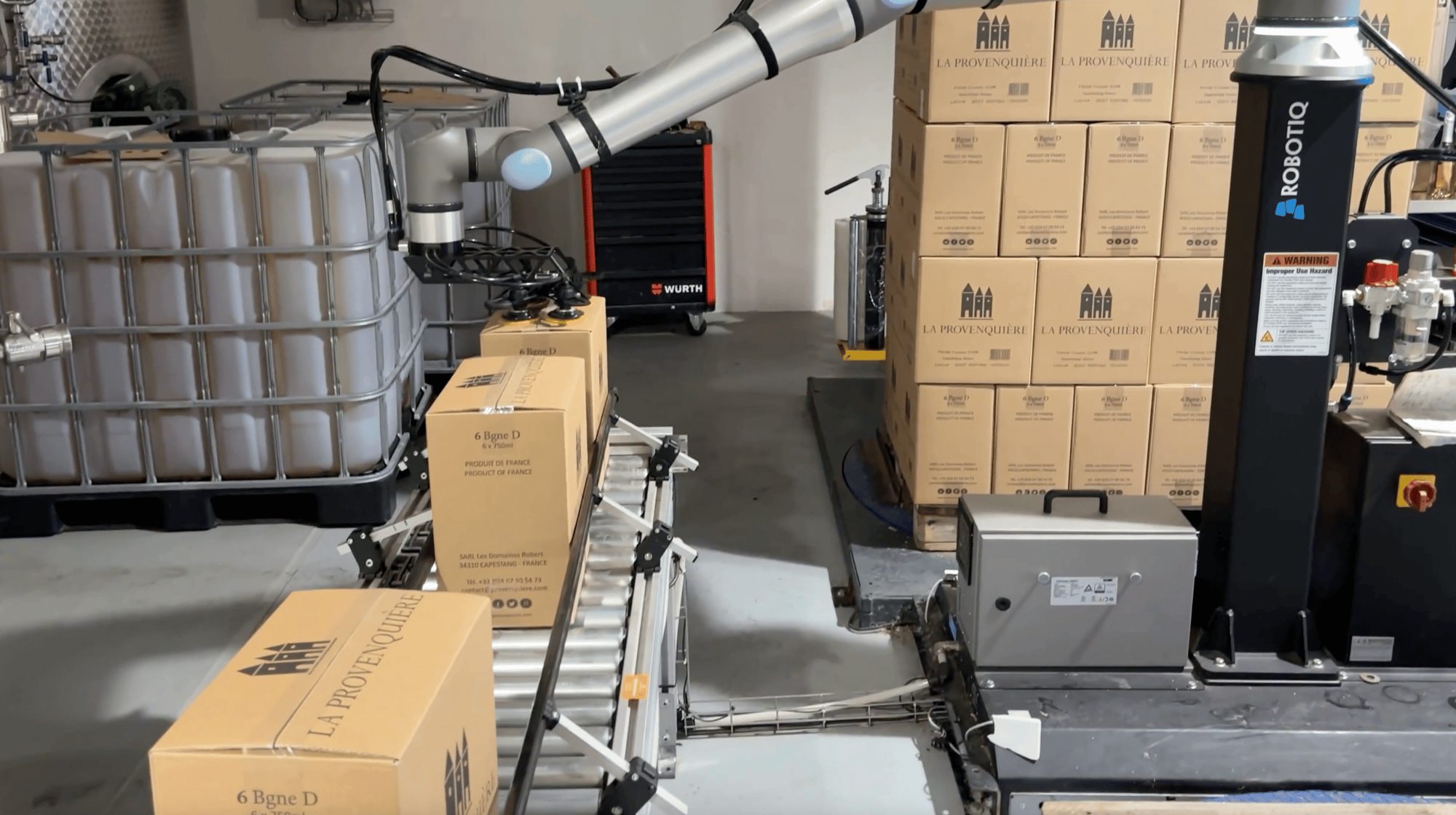
The cobot palletizes cartons of 6 or 12 bottles, depending on format. Operators are freed from manually palletizing 4 to 5 tonnes per day.
4 cycles per minute
The solution ensures a smooth pace at the end of the line.
Company Overview
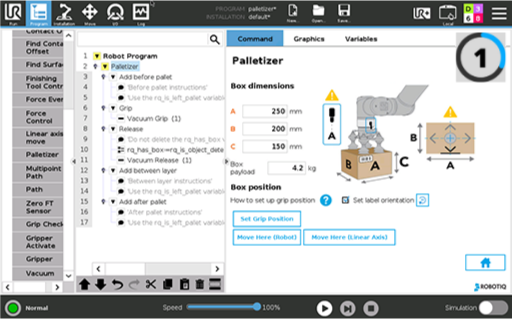
Step 1 - Box dimensions, weight and orientation

About Bulles Création
Founded in 2014 and based in Valréas, Bulles Création is a French service provider specializing in the production and bottling of sparkling beverages, including grape wines and non-alcoholic drinks. The company strives to combine technical flexibility with operational excellence to support the growth of local businesses.
The Challenge
By late 2024, Bulles Création had reached the limits of its packaging line. Output was capped at around 1,500 bottles per hour, limiting the company's ability to meet demand.
Palletizing was also one of the most physically demanding stations in the facility.
Operators had to handle:
- cartons of 6 or 12 bottles;
- loads of up to 20 kg;
- around 4.5 cartons per minute;
- between 4 and 5 tonnes cumulatively per day.
This setup created several difficulties:
- high physical strain at the station;
- repetitive movements;
- handling of heavy loads;
- risk of musculoskeletal disorders;
- difficulty supporting the company's growth;
- risk of having to turn down certain production orders due to lack of capacity.
For Bulles Création, the challenge was not only to produce faster, but also to rely on a more sustainable and safer line.
"Labor shortages, physical strain, the need to boost productivity... this automation project aimed to provide an effective response to several challenges shared by many food and beverage companies," explains Bruno Quenin, Co-Manager of Bulles Création.
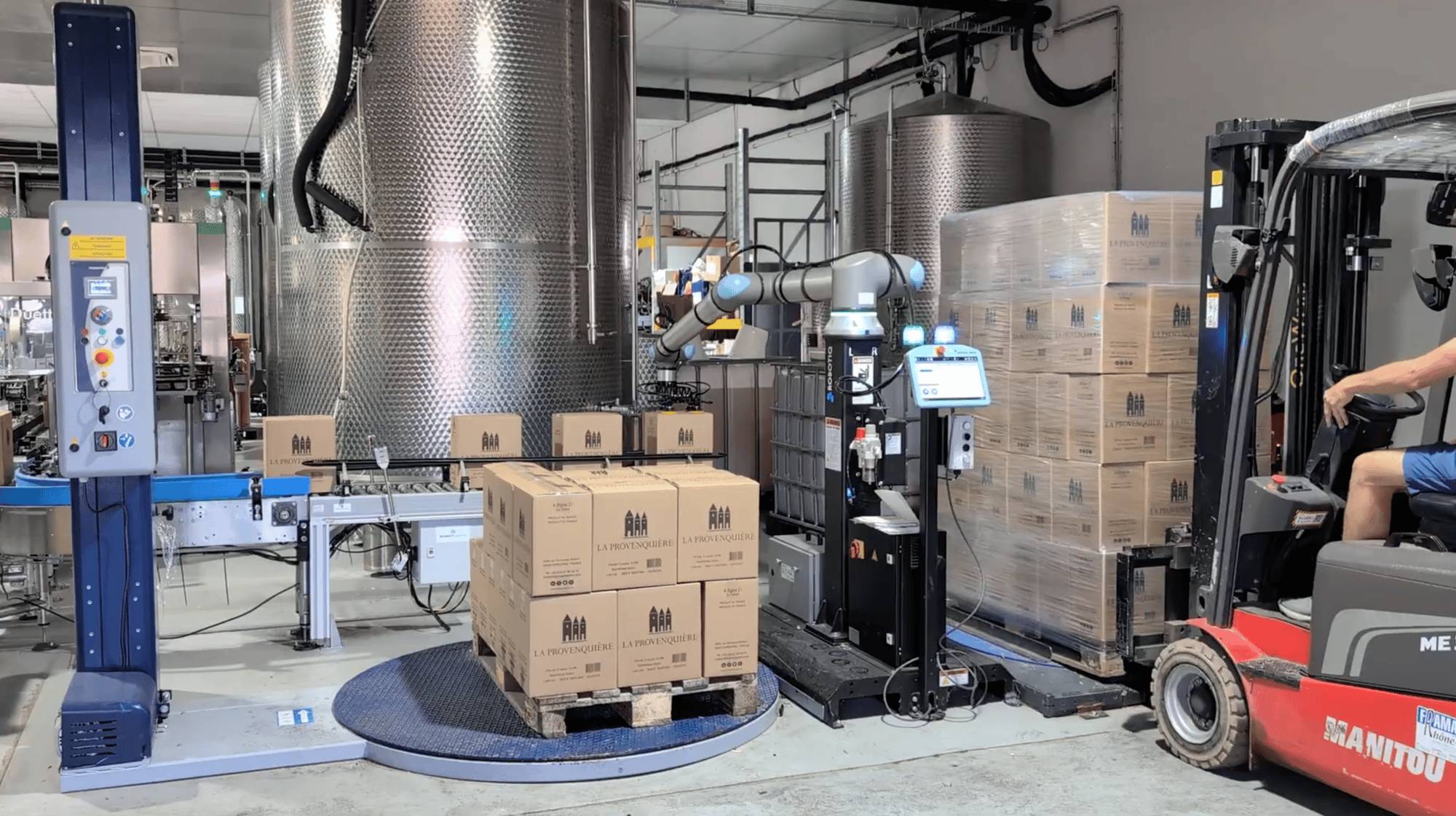
In a space-constrained facility, installing a traditional industrial robot with substantial safety barriers was hardly feasible. Bulles Création needed an automated palletizer capable of integrating into the existing environment without complicating operators' work.
The Solution
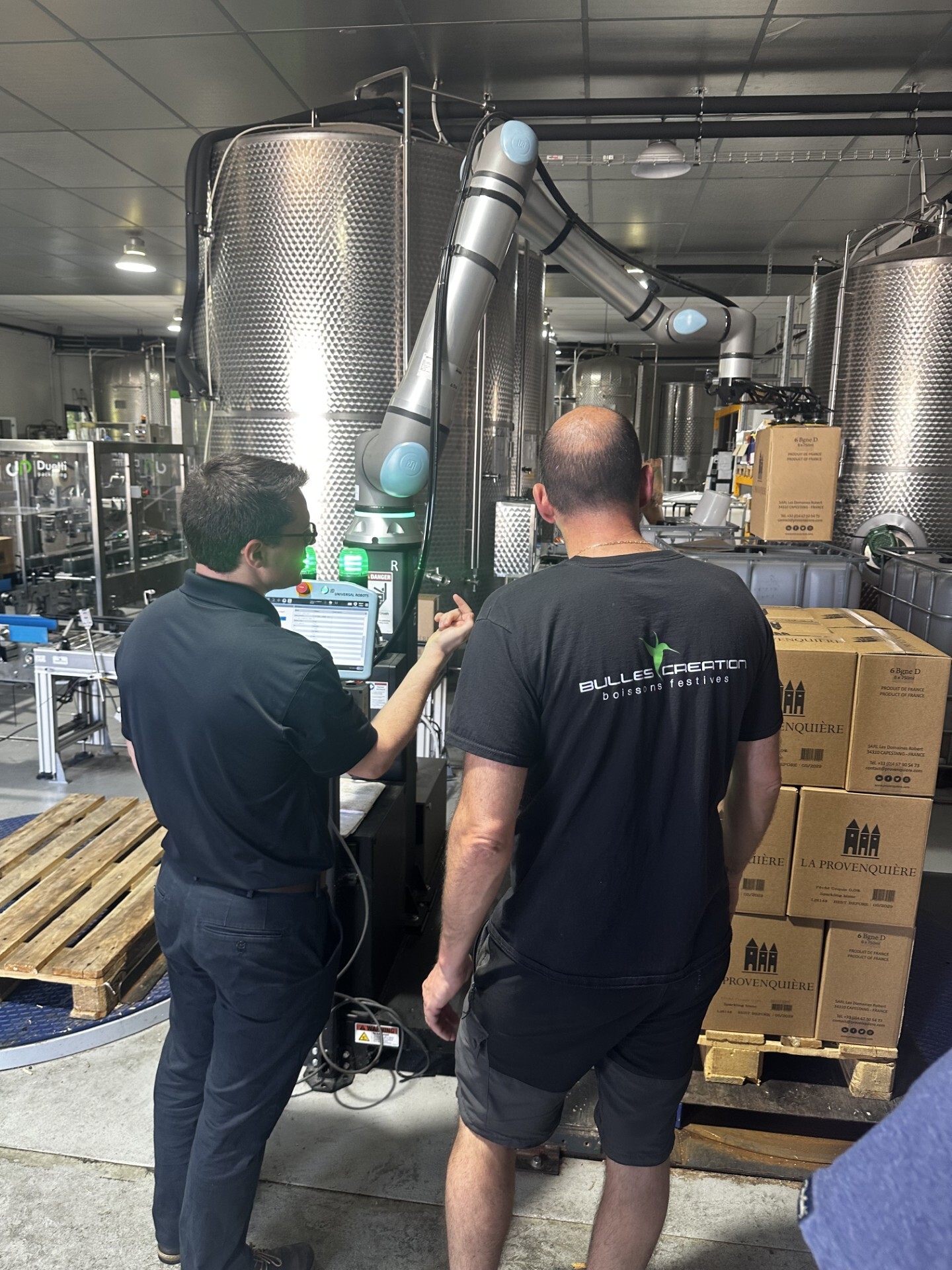
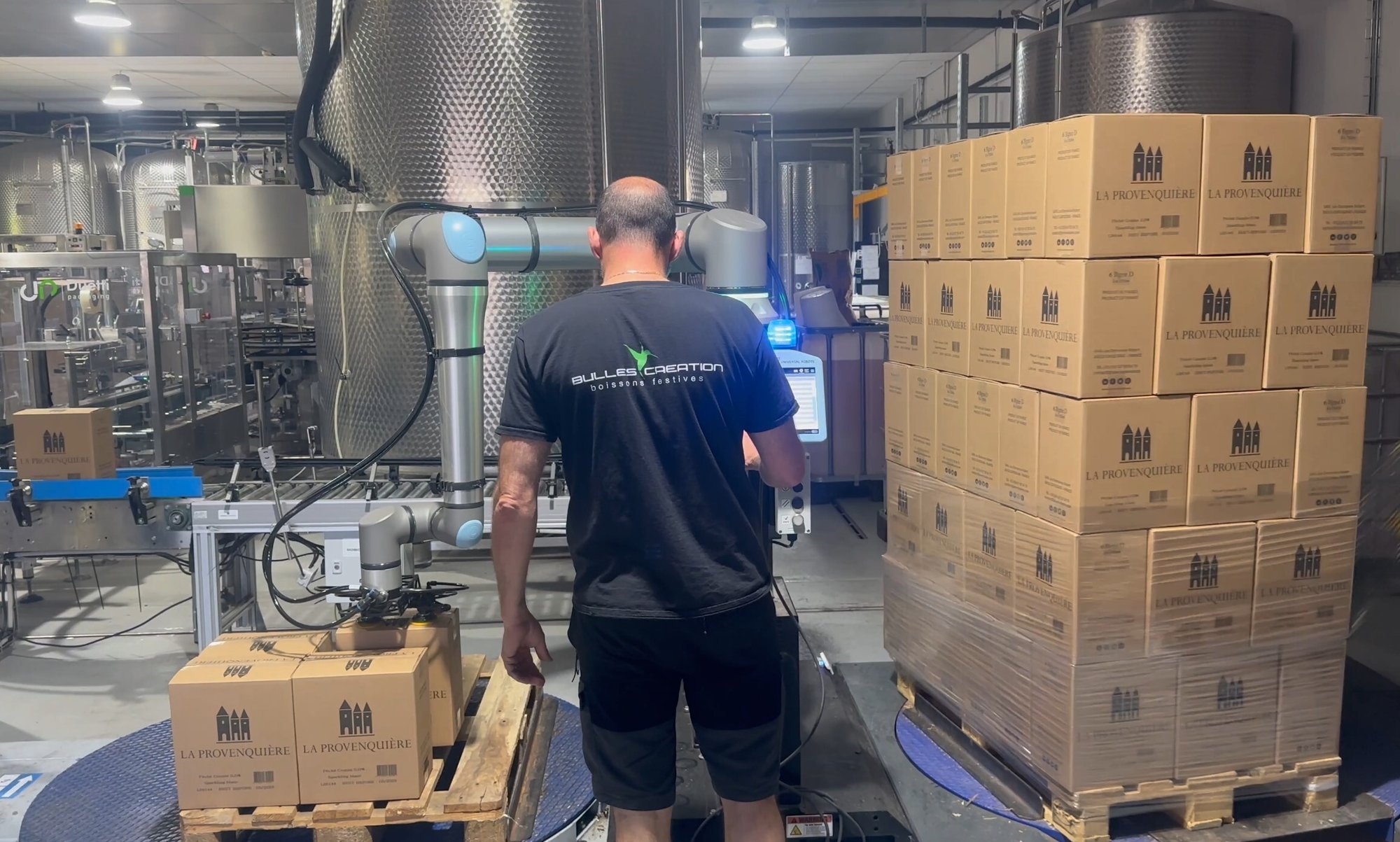
After meeting with integrator Isycod and distributor Sysaxes, Bulles Création chose Robotiq's PE20, a turnkey collaborative palletizing solution designed to automate the end of the line in a simple, compact, and flexible way.
The PE20 met the project's main requirements:
- small footprint;
- possible integration into a tight-space facility;
- compatibility with different carton formats;
- compatibility with different palletizing patterns;
- easy for operators to learn;
- deployment within just a few weeks;
- operation alongside teams, without a cage or heavy barriers.
The solution integrates a UR20 cobot capable of carrying up to 25 kg. In Bulles Création's application, it handles bottle cartons weighing up to 20 kg, using a Robotiq Vacuum Gripper adapted to variations between production runs.
The PE20 also enables:
- a smooth pace of 4 cycles per minute;
- a pallet height of up to 1,800 mm;
- the management of multiple palletizing recipes;
- adaptation to different carton sizes and shapes;
- simple operation, with no advanced programming required.
"We very quickly chose Robotiq's palletizer for its compactness, ease of use, and ability to adapt to multiple carton and pallet formats, while meeting the specific constraints of our production site," explains Bruno Quenin.
To ensure pallet stability and adapt to different production formats, the palletizing plan plays a central role.
It makes it possible to define:
- the position of cartons on each layer;
- the number of cartons per pallet;
- the orientation of the cartons;
- the final height of the pallet;
- the stability of the load before film-wrapping;
- adaptation to different carton formats.
With Robotiq's palletizing software, operators can configure and adjust these plans according to production needs, without advanced skills in robotics or programming.
Why Bulles Création Chose Robotiq
Significantly strengthened production capacity
Thanks to the automated PE20 palletizer, Bulles Création has surpassed its former limit of 1,500 bottles per hour to reach around 2,500 bottles per hour, with a target of up to 3,000 bottles per hour in the longer term. This increase in output allows the company to absorb higher volumes, meet sustained demand, expand its customer portfolio, and avoid turning down production orders due to lack of capacity.
Employees reassigned to higher-value tasks
Automation frees operators from repetitively carrying heavy cartons, reducing the risk of musculoskeletal disorders and physical strain at the end of the line. Employees can now focus on more rewarding tasks, such as research and development for new in-house products.
A flexible, compact solution that benefits the company
With its small footprint and no cage or heavy barriers, the PE20 integrates easily into a space-constrained facility. Simple to use, it allows operators to configure and launch recipes without advanced programming, while adapting to different carton formats. By modernizing its production tools and improving working conditions, Bulles Création strengthens its appeal, retains its employees, and enhances the image of the food and beverage industry.
The Robotiq solution
Frequently Asked Questions
What is the role of an automated palletizing system?
An automated palletizing system takes cartons at the end of the line, organizes them according to a defined plan, and builds stable pallets.
It helps to:
-
improve output;
-
reduce physical strain;
-
make the end of the line more reliable;
-
optimize pallet height;
-
facilitate storage;
-
prepare goods for loading and transport.
Which palletizing method should be chosen for food and beverage products?
The palletizing method depends on the product, the weight of the cartons, the type of pallet, the desired height, and transport requirements. For bottle cartons, priority should be given to a method that ensures load stability and limits manual handling.
What role does software play in an automated palletizer?
The software makes it possible to configure palletizing recipes, adjust the pallet plan, and change format depending on the product. It helps operators manage different cartons, heights, and pallet types without advanced programming.
Can a cobot handle heavy boxes or cartons?
Yes. In Bulles Création's application, the cobot handles cartons weighing up to 20 kg. The Robotiq Palletizing Solution can lift up to 35 kg. The PE20 integrates a UR20 capable of carrying up to 25 kg, paired with a suction-cup gripper adapted to heavy cartons.
Can an cobot palletizer be integrated into a small facility?
Yes. A collaborative solution like the PE20 is designed to integrate into compact industrial setups. It is particularly well-suited to facilities where available space does not allow for the installation of a traditional industrial robot with a protective cage.
Could your bottling line benefit from an automated palletizer?
Does your production still rely on manual palletizing? Do your operators handle heavy loads? Has your bottling line reached its limits?
A collaborative palletizing solution can help you take the next step if you want to:
- increase your output;
- reduce physical strain;
- automate the end of the line;
- gain consistency;
- make better use of available space;
- improve the appeal of your workstations;
- support the growth of your business.
Robotiq's PE20 makes it possible to automate the palletizing of bottle cartons with a compact solution that is simple to use and suited to space-constrained industrial environments.